
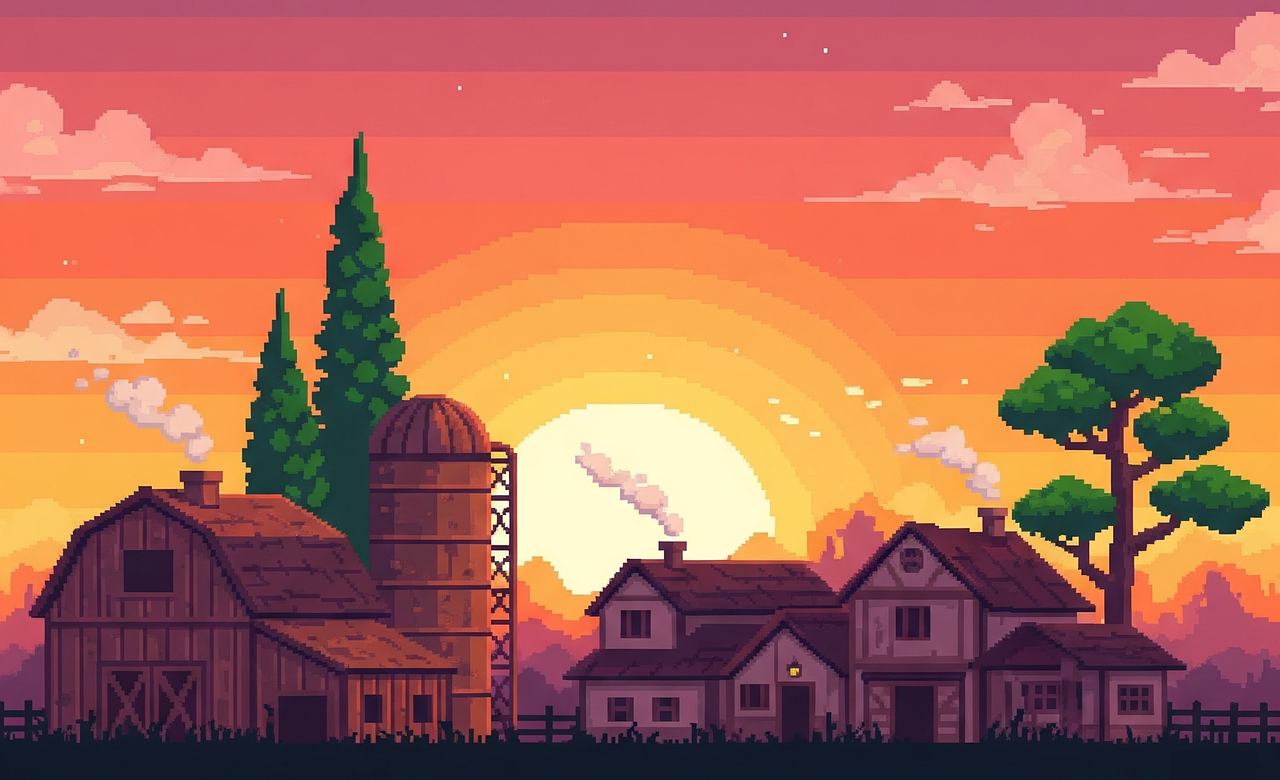
Every gamer has that one title that feels less like a challenge and more like a warm blanket. For me, that game was Harvest Moon 64. My sister and I used to take turns tending our virtual farm, planting crops, raising cows, and watching the seasons roll by. It was strangely relaxing; doing digital chores somehow felt more rewarding than real ones ever did.
Released in 1999 for the Nintendo 64, Harvest Moon 64 followed the original Harvest Moon on the Super Nintendo Entertainment System and the Harvest Moon Game Boy adaptation. Those early handheld versions proved that a farming simulation could work on the go, but the N64 entry expanded the formula with more characters, richer relationships, and a sense of life that felt almost real. It gave players freedom, routine, and gentle progress without the stress of combat or high stakes. You woke up, watered your crops, chatted with townsfolk, and watched your little patch of land grow into something special. It was slow, simple, and deeply satisfying—exactly what cozy gaming is all about.
Life in Polygons: Animal Crossing on GameCube
A few years later, Nintendo offered a different kind of cozy escape: Animal Crossing on the GameCube. This one took relaxation to a new level. There were no deadlines, no farm profits to chase, and no failure states at all—just you, your neighbors, and the passage of time.
Animal Crossing was almost too laid-back to hold my attention for long, but at the time it was the perfect mental reset. After a long day, I could step into that little village, check the mail, fish for a while, or decorate my house. It was not about achievement; it was about presence.
Stardew Valley: A New Generation of Cozy
Fast forward to today, and the torch of comfort gaming burns brighter than ever with Stardew Valley. Created by a single developer, ConcernedApe, it reimagined the spirit of Harvest Moon for a modern audience. It captures everything I loved about the old games—farming, friendship, festivals—but with a new layer of depth and heart.
And best of all, it finally brought true multiplayer. Sharing the calm rhythms of farm life with friends made the experience even more rewarding. Stardew Valley became the perfect blend of nostalgia and community, a cozy world that feels alive because it is shared.
Why We Keep Coming Back
What makes cozy games so timeless? They remind us that not every moment has to be a battle. Sometimes the best kind of gameplay is the kind that lets us breathe, slow down, and take pleasure in small things.
Whether it is milking cows in Harvest Moon, decorating a home in Animal Crossing, or tending a shared farm in Stardew Valley, cozy games provide a peaceful getaway from the noise of everyday life. They are about mindfulness, rhythm, and finding joy in the ordinary—a digital escape that feels surprisingly human.
Final Thoughts
As much as I love a good action-adventure or RPG, nothing quite compares to the quiet satisfaction of cozy games. They are not about winning; they are about being. Maybe that is why we keep returning to them year after year: because sometimes the best stories are the simple ones we build ourselves.
Cozy games remind us that even in pixels and polygons, peace is something we can grow, harvest, and share.
Image by Ancient Behomoth from Pixabay