
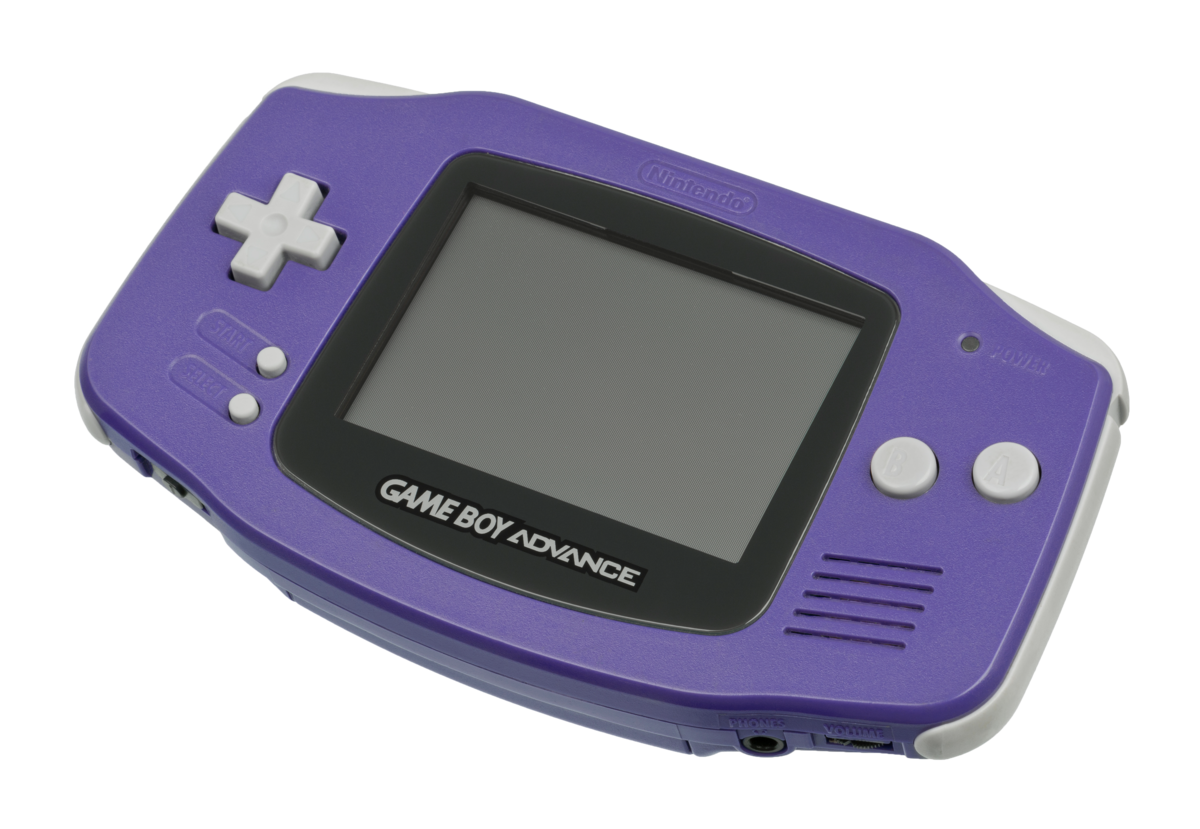
When Nintendo released the Game Boy Advance in 2001, it marked a major leap forward for handheld gaming. For the first time, players could experience console-quality games in a portable format that felt closer to the Super Nintendo than the original Game Boy line. The GBA was fast, colorful, and ambitious, setting the stage for one of Nintendo’s most beloved handheld eras.
Release and Early Reception
The Game Boy Advance launched in Japan in March 2001 and later that year in North America and Europe. At launch, the system immediately impressed players with its 32-bit hardware, sharp sprite scaling, and expanded color palette.
Early reviews praised:
- Smooth performance and fast load times
- A huge improvement over the Game Boy Color
- Familiar controls that felt instantly comfortable
The biggest criticism was the lack of a backlit screen, which made the original GBA difficult to see in low light. Nintendo would later address this issue with the Game Boy Advance SP, which became the definitive model for many players.
Despite this early flaw, the GBA was a commercial success and quickly became the dominant handheld of the early 2000s.
A Library Packed With Classics
The Game Boy Advance’s true strength was its vast and high-quality game catalog. Developers treated the system like a portable SNES, and Nintendo leaned heavily into first-party franchises.
Some standout titles include:
- Advance Wars
- Metroid Fusion and Metroid Zero Mission
- The Legend of Zelda: A Link to the Past and The Minish Cap
- Pokémon Ruby, Sapphire, Emerald, FireRed, and LeafGreen
- Mario Kart: Super Circuit
- Castlevania: Aria of Sorrow
- Golden Sun and Golden Sun: The Lost Age
The GBA also became a home for excellent ports, remakes, and original RPGs, many of which remain highly sought after today.
Lasting Legacy
Over its lifespan, the Game Boy Advance sold over 80 million units worldwide, making it one of Nintendo’s most successful handheld systems. It bridged the gap between classic 2D design and modern portable gaming, and its influence can still be felt in today’s indie and retro-styled games.
For many players, the GBA represents a golden age of handheld gaming. Its library is deep, diverse, and consistently fun, and the system remains a favorite for collectors and retro enthusiasts alike.