
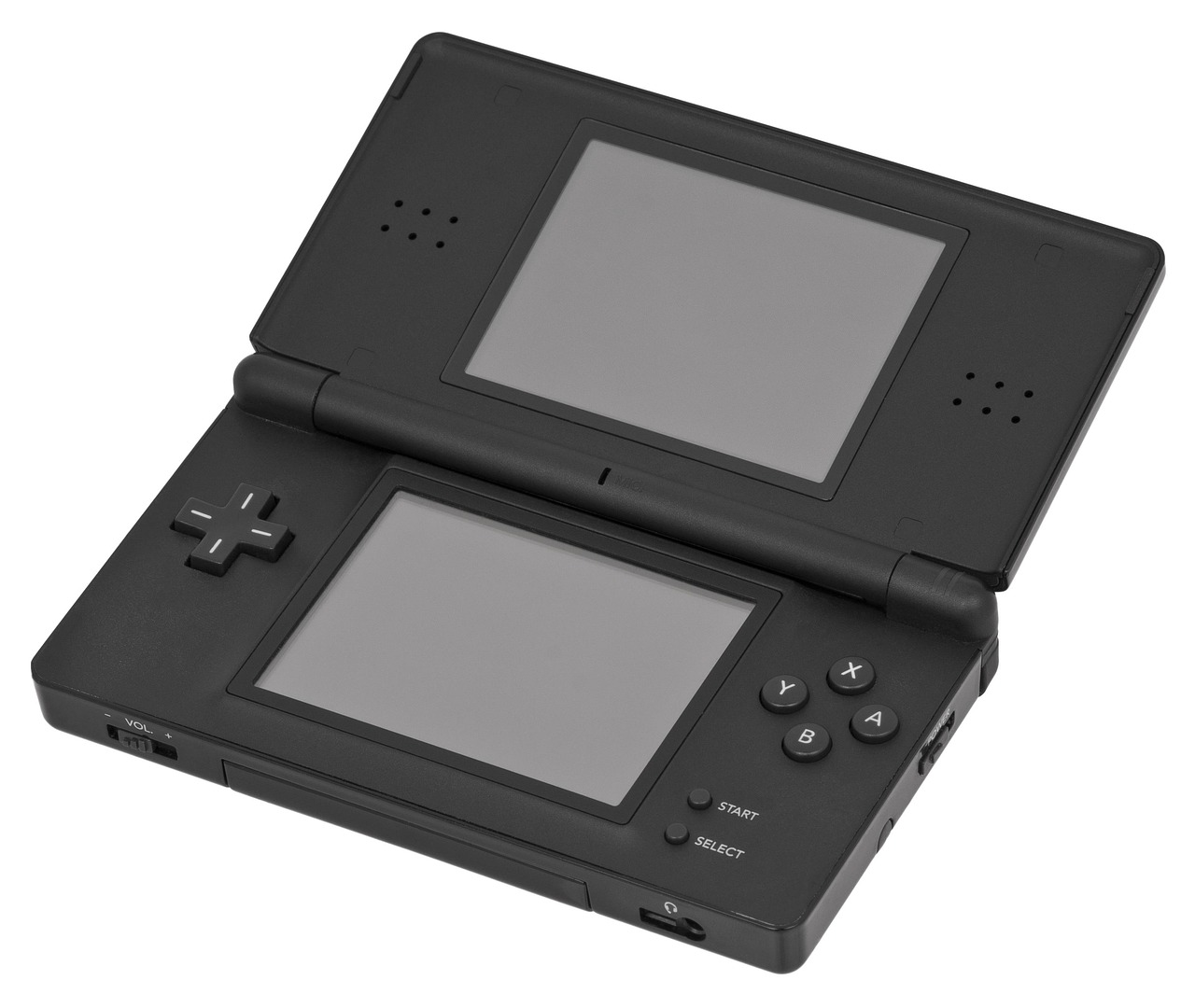
When Nintendo unveiled the Nintendo DS in 2004, it felt like a bold experiment. A clamshell handheld with two screens, one of them touch-sensitive, was unlike anything on the market. Some saw it as a gimmick, but within months, it became clear that the DS wasn’t just a new console; it was the start of a handheld revolution.
Nintendo DS (2004)
The original DS introduced features that would define a decade of Nintendo handhelds: dual screens, a touch interface, built-in microphone, and local wireless multiplayer. The lower touch screen opened new gameplay possibilities, from Nintendogs’ pet care to The Legend of Zelda: Phantom Hourglass’ stylus-based puzzles.
Critics praised its innovation, and while early designs were a bit bulky, it quickly found an audience. Over 150 million DS units were sold across all models, making it one of the best-selling systems of all time.
Nintendo DS Lite (2006)
In 2006, Nintendo refined its hit system with the DS Lite. It was sleeker, lighter, and featured brighter screens that dramatically improved visibility. The stylus was redesigned for comfort, and battery life received a major boost. Functionally identical to the original DS, the Lite’s premium feel helped it become the definitive version for many players.
Nintendo DSi (2008)
The DSi represented a bigger leap. Nintendo added two cameras, an SD card slot, and a new online store, the DSi Shop, paving the way for downloadable handheld games. It also dropped the Game Boy Advance cartridge slot, signaling the end of backward compatibility. The DSi was thinner, with slightly larger screens and new built-in software like a photo editor and sound recorder.
Nintendo DSi XL (2009)
With the DSi XL, Nintendo shifted focus toward comfort and accessibility. It sported massive 4.2-inch screens (nearly 90 percent larger than the original DS) and wider viewing angles. Aimed at families and older players, it turned handheld gaming into a more social experience, perfect for multiplayer sessions or casual play.
Nintendo 3DS (2011)
The 3DS arrived with its defining feature: glasses-free stereoscopic 3D. Players could experience depth and perspective without any special equipment. It also featured a built-in analog “Circle Pad,” augmented reality features, and a StreetPass system that encouraged real-world player interaction.
While the 3D effect divided some fans, the console offered a strong library including Super Mario 3D Land, Fire Emblem: Awakening, and Animal Crossing: New Leaf. Early sales were slow, but a price cut and great software lineup revived it quickly.
Nintendo 3DS XL (2012)
The 3DS XL followed the same path as the DSi XL before it: bigger screens, longer battery life, and a more comfortable build. The larger 4.88-inch top display made the 3D effect more stable, and it became the most popular 3DS model among players who valued comfort and immersion.
New Nintendo 3DS and New Nintendo 3DS XL (2014–2015)
Nintendo closed out the dual-screen era with the New 3DS line, featuring a faster CPU, extra control inputs (a second mini “C-Stick” and extra shoulder buttons), face-tracking for improved 3D, and built-in amiibo support.
The New 3DS XL, released in 2015 in North America, represented the peak of the design: large screens, refined ergonomics, and compatibility with the full 3DS library plus select enhanced titles. It was the final evolution of a decade-long experiment that changed how handheld gaming felt and played.
The Legacy of Dual Screens
From the chunky original DS to the sleek New 3DS XL, Nintendo’s dual-screen handhelds reshaped portable gaming. They turned touchscreens, local play, and 3D immersion into household concepts long before smartphones caught up. Even now, those folding clamshells stand as icons of creativity and innovation.
| Console | Key Features | Top Screen Size | Bottom Screen Size | Release Year |
|---|---|---|---|---|
| Nintendo DS | Dual screens, touchscreen, microphone, wireless multiplayer | 3.0 in | 3.0 in | 2004 |
| Nintendo DS Lite | Slimmer, brighter screens, longer battery life | 3.0 in | 3.0 in | 2006 |
| Nintendo DSi | Cameras, SD card, online store, no GBA slot | 3.25 in | 3.25 in | 2008 |
| Nintendo DSi XL | Larger screens, improved viewing angles | 4.2 in | 4.2 in | 2009 |
| Nintendo 3DS | Glasses-free 3D, Circle Pad, StreetPass | 3.53 in | 3.02 in | 2011 |
| Nintendo 3DS XL | Larger screens, better battery life | 4.88 in | 4.18 in | 2012 |
| New Nintendo 3DS | Faster CPU, face-tracking 3D, amiibo, C-Stick | 3.88 in | 3.33 in | 2014 |
| New Nintendo 3DS XL | All New 3DS features, larger display | 4.88 in | 4.18 in | 2015 |
Image by WikimediaImages from Pixabay